Cities
Lucerne: City Rejects “CityLink” Cable Car Project
“After careful consideration, the city council has concluded that CityLink does not deliver the benefits it promises. In its view, these benefits do not justify the associated risks,” the City of Lucerne said on its website.
To further improve the quality of life and attractiveness of Lucerne, the city council believes that continuing with its existing strategic priorities in tourism and mobility is the right approach. The council therefore recommends rejecting the initiative.
The “CityLink” project
The private interest group CityLink Lucerne submitted the popular initiative “CityLink Lucerne – for a city of short distances and a solution to coach parking” in June 2025. According to the group, the CityLink cable car would help remove tourist coaches from Lucerne’s city centre.
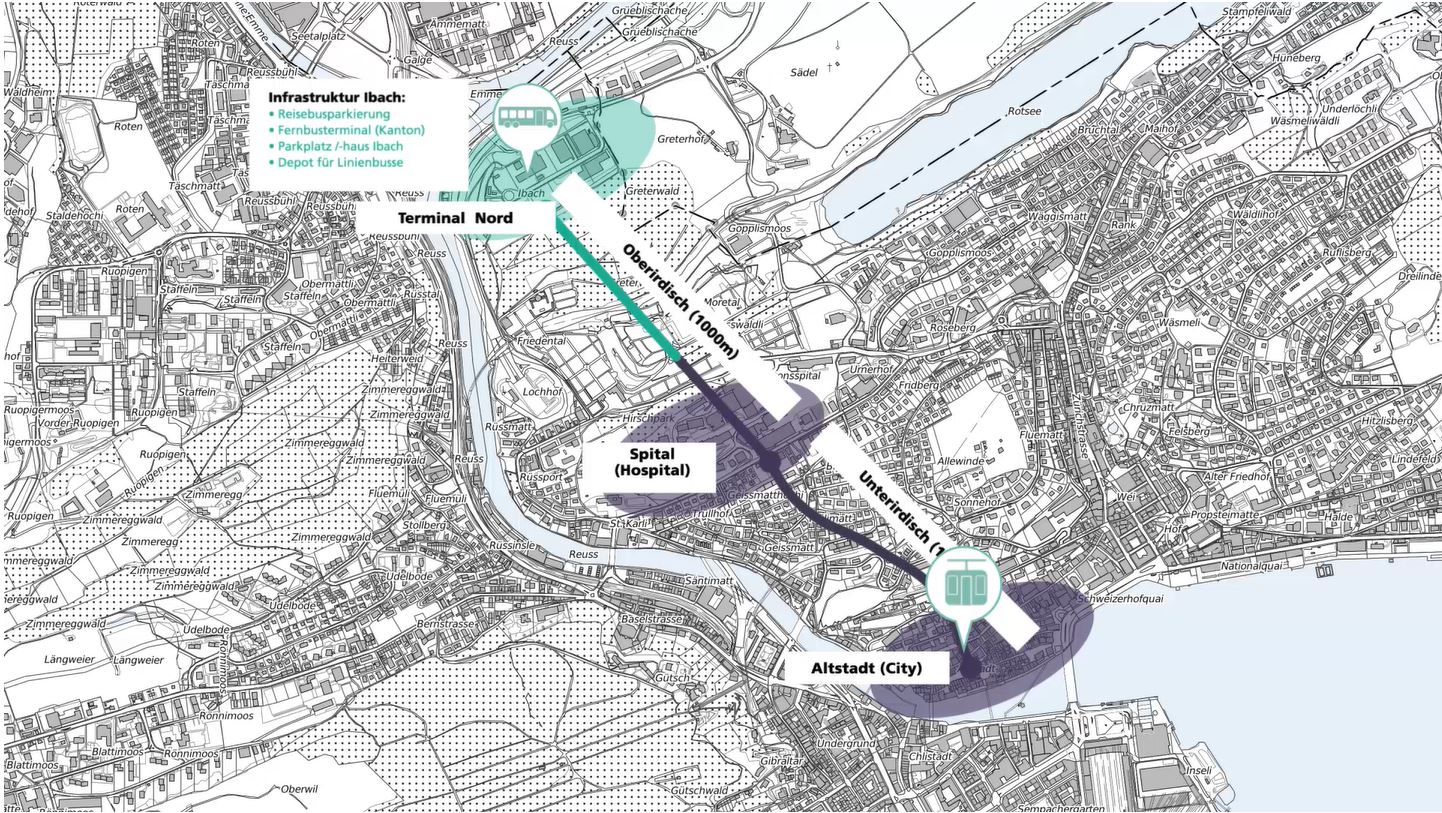
Under the proposal, the cable car would connect Lucerne’s city centre with the cantonal hospital and the Ibach employment area in the north of the city. The CityLink system would consist of two sections, each around one kilometre long.
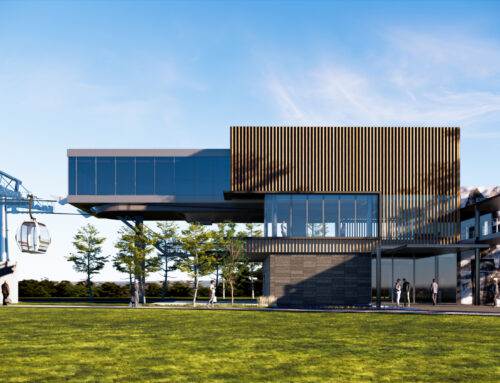
The route to the hospital would run underground, before continuing above ground to Ibach. Inside the tunnel, the cabins would travel on an overhead rail system before seamlessly switching to cable operation.
A middle station beneath the hospital would provide direct access to the new hospital square. The two terminal stations would be located in Ibach and the old town, with the intermediate station beneath the cantonal hospital offering direct access to the hospital square.
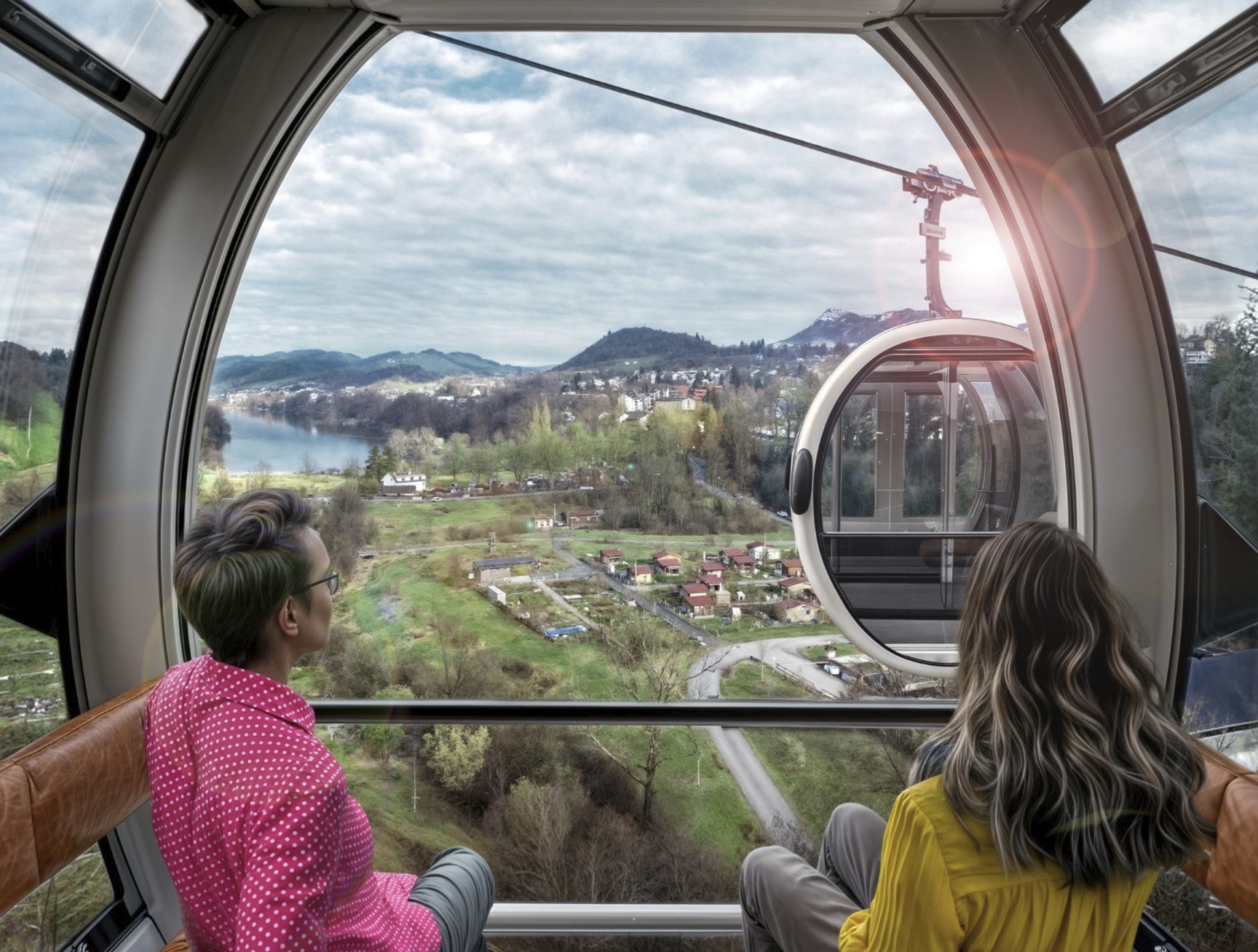
The planned cabins would carry eight or ten passengers, with a maximum capacity of around 2,200 passengers per hour in each direction.
Who is behind the project?
According to the project’s website, the CityLink Lucerne interest group brings together around 20 private companies and organisations from Lucerne and the surrounding area.
“Little benefit, more traffic, no solution”
“Cable cars are generally an attractive means of transport for people of all ages. However, while the idea of building a cable car from Ibach to the old town may sound appealing and innovative, a closer look shows that the project is of limited value and not suitable for the sustainable development of Lucerne as a tourism destination,” the city said on its website.
Regarding tourist coaches, the city added that the introduction of a new coach management system in spring 2025 — including a CHF 100 stopping fee and new pick-up and drop-off rules — has significantly reduced the number of coaches in Lucerne’s city centre.
The city council also argues that the CityLink project is based on tourism demand levels last seen in Lucerne before the coronavirus pandemic. At that time, coach parking and stopping areas were reaching their capacity limits.
“Since then, demand has fallen permanently. The existing 55 coach parking spaces and 20 stopping areas have not been fully used in recent years.”
Proposed cable car route
High financial risk for the city
In addition, the city council sees major financial risks associated with the construction of the CityLink cable car.
“So far, the initiators have not published a business plan showing the financial viability of the operation. […] If the project fails during the operating phase, the city would very likely have to take over the infrastructure and operations or finance its dismantling. The city council therefore considers the financial risk for Lucerne to be high.”
According to the Lucerne city council, the CityLink project would also mean that the city would have to give up around CHF 1.8 million in annual revenue from current coach stopping and parking fees.
This would be compounded by the loss of planned revenue from lease payments for the plots of land in Ibach, estimated at around CHF 360,000 per year.
“CityLink” doesn’t give up
The initiators of the project have already responded to the city council’s negative stance. They emphasize that, despite the opposition, they have received a great deal of positive encouragement from the public.
“Over the past few weeks, we have received numerous positive and encouraging responses from residents, businesses, and political representatives. This broad support gives us confidence and strengthens our commitment,” said Roger Sonderegger, President of IG CityLink.
“A letter to the editor published in the Luzerner Zeitung summed it up perfectly: the city, the canton, and the project initiators should sit down together and continue developing the project instead of prematurely burying such a promising idea.”
More than just a coach parking project
The project team stresses that CityLink is far more than simply a parking solution for tourist coaches. Reducing the project to that single aspect, they argue, significantly underestimates its potential.
“From the very beginning, the initiative has pursued a much broader vision: creating a new north-south connection, improving access to the cantonal hospital, developing a new transport hub, and opening up new development opportunities for the Ibach area,” the official statement says.
With an intermediate station at the cantonal hospital, integration into the bus network, and the possibility of extending the line to Seetalplatz in Emmen, CityLink is designed as an integral part of the public transport system.
Appeal to the city: Think long-term
The project’s authors urge the authorities to take a long-term view when planning Lucerne’s future development.
“At its core, there are two opposing perspectives. The city council evaluates CityLink primarily through the lens of today’s tourist coach traffic system. The initiators and supporters, however, see it as a long-term investment in urban development, improved accessibility for Lucerne, and a modern, integrated transport network.”
IG CityLink remains convinced of the project’s value:
“A growing city should not dismiss innovative solutions too quickly. Lucerne needs the courage to carefully evaluate and further develop major projects for the future instead of burying opportunities prematurely. CityLink therefore deserves an honest and open-minded discussion.”